


HD Camera for Android
4.5697.00 Reviews
App Specs
- Version
- 1.46
- Updated On
- License
- Free
- Downloads
- 10,000,000+
- Developer
- One Music Player
- Categories
- Beauty
- Platform
- Android
Screenshots


 Analysis by AppCompare
Hey there, fellow photography enthusiasts! Today, I’m diving deep into the world of mobile photography with an app that promises to take your snaps to the next level: HD Camera for Android. I've had some time to tinker with it, and let me tell you, it’s packed with features that might just make you ditch your default camera app.
My overall take is more cautious than that opening promise: this is a free camera app from One Music Player that aims to give Android users another way to frame and capture photos. It may suit someone who enjoys trying camera controls and visual effects, but I would not assume that installing a separate camera app automatically improves a phone’s pictures. The result depends on the phone, the light, and how much control you actually want.
Who is most likely to enjoy it?
I can see the appeal for a casual photographer who wants to explore settings without turning every outing into a technical exercise. If you like taking portraits, food photos, or quick travel snapshots and enjoy experimenting with the look before you take a picture, an extra camera interface can make photography feel more deliberate. It also gives curious beginners a reason to learn what exposure and white balance do, rather than treating the camera as a button that either works or does not.
On the other hand, if you usually open the built-in camera, tap once, and move on, a second camera app may add little to your routine. The phone’s own camera is often the simplest choice when you rely on device-specific processing or already know where its controls are. I would also look elsewhere if your priority is an established editing workflow after the shot, because a camera app and a full photo editor solve different problems.
Getting Started with HD Camera
First things first, installation is a breeze. Head over to the Play Store, tap install, and you’re ready to roll. Once you fire it up, you’re greeted with a sleek and intuitive interface. It’s designed to mimic the look and feel of a professional camera, which is a nice touch for those of us who are used to DSLR layouts. The controls are all there, right at your fingertips, making it super easy to adjust settings on the fly.
HD Camera is free to install and is rated for Everyone. Its current version is 1.46, and it runs on Android 5.0 or later. The app has a 4.4 average from around 47,000 ratings, with over 5 million installs. Those figures suggest it has reached a broad audience, though they cannot tell you whether its interface or image results will suit your particular phone. Optional in-app purchases range from $0.99 to $99.99 per item, so I’d check the purchase prompts carefully if you prefer to keep your camera use entirely free.
Features That Stand Out
Now, let’s talk features, and boy, does HD Camera for Android have them! One of my favorites is the manual mode. If you’re like me and love tweaking settings, you’ll appreciate the ability to adjust ISO, exposure, and white balance manually. This is a game-changer for those tricky lighting situations.
Worth Reading Before You Choose

Baby Panda World Brings Quick Play to Modern Phones, but Its Game Library Feels Busy

ESPN’s Live Game View Makes Following Close Games Easier

QuizzLand Review: A Good Fit for Short Trivia Breaks, Not Every Player

Basketball Stars: Multiplayer Is Fast, but Can It Recover When Matches Go Wrong?

WEBTOON Turns Phone Updates Into a Better Reading Routine

Link to Windows Runs on Shared Habits, Not Social Feeds
The practical value of manual controls is less about making every image look polished and more about choosing what matters in a difficult scene. In a dim room, for instance, I would try a small adjustment at a time and check whether the brighter preview also makes movement blur more noticeable. For a bright window behind a person, exposure control gives you a way to decide whether the face or the view outside should take priority. These choices are useful learning tools, but they still depend on the camera hardware in the phone.
A simple habit helps when testing settings: take a quick reference shot first, then change just one control and compare the results. That makes it easier to tell whether a change helped, and it avoids losing track of several adjustments at once. I’d use this approach for a still subject, such as a cup on a table, rather than trying to learn the controls while a child, pet, or passing moment is moving. Manual options can reward patience, but they are not a shortcut to a sharp photo in every situation.
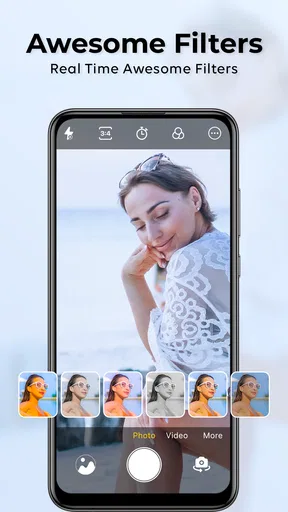
Another standout feature is the wide range of filters and effects. Whether you’re going for a vintage vibe or a modern aesthetic, there’s something for everyone. Plus, the real-time filter option lets you see how your photos will look before you even hit the shutter button. It’s perfect for perfectionists who want to nail the shot on the first try.
For everyday use, I’d treat live filters as a way to preview a mood, not as a guarantee that the final photo will look identical on every screen. A filter can help keep a small set of pictures visually consistent—for example, a few images from the same café visit—but it can also make skin tones or food look less natural than expected. When the subject matters more than the styling, I’d take a neutral-looking version first if the app’s available controls allow it, then decide on the effect later. That preserves a more flexible starting point.
Performance and Usability
In terms of performance, the app is snappy and responsive. I didn’t experience any lag or crashes, which is a relief when you’re trying to capture that perfect moment. The autofocus is quick and accurate, and the image processing is top-notch, delivering crisp and clear photos every time.
In real use, I would still test focus and exposure before relying on any camera app for a moment that cannot be repeated. Open it at home, point it at something near a window and then at a darker corner, and see how quickly you can get the framing and brightness you want. That brief check is more useful than assuming one camera interface will behave the same way on every Android model. If the built-in camera is already faster to launch on your phone, that small delay may matter more than extra controls when a spontaneous moment appears.
A realistic use case is taking a few pictures of a meal before friends start eating. I’d frame one wider shot, check the light on the food, and then take a closer detail rather than repeatedly applying effects to the same composition. For a weekend walk, the grid can help keep a horizon level, while a more deliberate exposure check can stop a bright sky from distracting from the subject. This kind of routine makes the tools useful without turning a quick photo into a long setup.
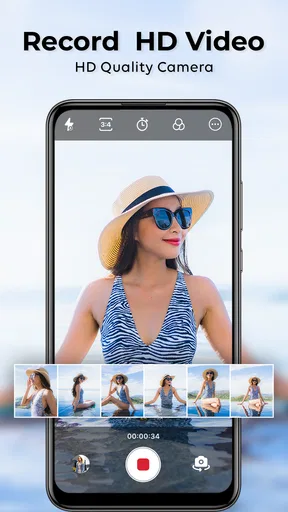
For video, I would make a short test clip before recording something important. Check that the subject stays in focus, listen to the sound, and confirm that the framing works when you move the phone. A feature such as slow motion is best treated as an occasional creative choice, not a substitute for planning a clear shot. If you need a dependable recording for an event, the camera app already familiar to you may be the safer option until you know how this one behaves on your device.
For those who love to shoot videos, you’re in luck! The app supports Full HD video recording with adjustable frame rates, giving your videos a professional look. There’s also an option to capture slow-motion videos, which is always fun for action shots or creative storytelling.
Additional Tools and Settings
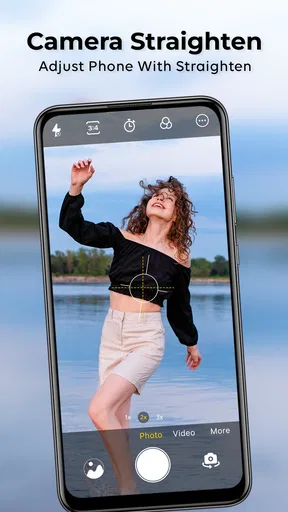
Beyond the basic features, HD Camera for Android offers a plethora of additional tools. There’s a grid overlay to help with composition, and a level gauge to ensure your shots are perfectly aligned. The app also supports geotagging, so you can keep track of where each photo was taken, which is great for travel enthusiasts.
The grid and level are most helpful when the scene has lines that make a tilt obvious: a building, a tabletop, or a horizon. I would switch them on when composing those shots and ignore them for a fast candid where getting the moment matters more than exact alignment. Geotagging can be handy for remembering where a travel photo was taken, but it is worth thinking about before sharing pictures from places you would rather keep private. Location detail is useful in a personal archive; it is not necessary for every image sent to a group chat.
One small workflow tip is to decide before shooting whether a picture is mainly for sharing or keeping. For a quick social post, a live effect and direct sharing may save steps. For a family photo or a travel memory, I’d prioritize composition and a clean original, then choose where and with whom to share it. That distinction helps avoid letting a convenient button determine what happens to a photo before you have considered its audience.
If you’re someone who loves to share your photos instantly, the app has built-in sharing options. You can quickly post your masterpieces to social media or send them via messaging apps without leaving the app interface.
Compared with the usual alternatives, the choice is straightforward: the built-in camera is generally the first stop for speed and familiar phone-specific behavior, while a separate camera app is worth trying when its controls or live effects fit how you shoot. An editing app is a better companion when your main interest is refining images after capture rather than changing how you take them. I would not keep several camera apps in daily rotation unless each has a clear job; otherwise, switching interfaces can slow you down and make it harder to remember where a setting lives.
HD Camera was released on May 22, 2023, and is developed by One Music Player. Its Beauty category framing may make sense for people interested in selfies and appearance-focused photos, but the practical question is still whether the controls feel comfortable on your handset. The app is not automatically the right pick for someone seeking a dedicated professional workflow, extensive post-processing, or guaranteed results across every Android camera. If those are your needs, compare it with your phone’s native camera and a specialist editor before settling on a routine.
Wrapping Up
In conclusion, if you’re passionate about photography and want more control over your shots, HD Camera for Android is definitely worth checking out. It combines professional-grade features with user-friendly design, making it suitable for both beginners and seasoned photographers. So, why not give it a shot and see how it transforms your mobile photography experience?
My recommendation is more specific: try it if you want to experiment with camera controls, filters, composition aids, or quick sharing, and judge it using the kinds of photos you actually take. It is a less compelling choice if you want a zero-effort point-and-shoot experience or depend on one familiar camera workflow for important moments. The rating and install count make it a well-used option, but your own brief test—especially with low light, moving subjects, and video—will tell you more about whether it earns a place on your phone.
Remember, the best camera is the one you have with you, and with this app, you’ll be ready to capture stunning images wherever you go. Happy snapping!
Pros
- High-resolution photo and video quality.
- User-friendly interface with easy navigation.
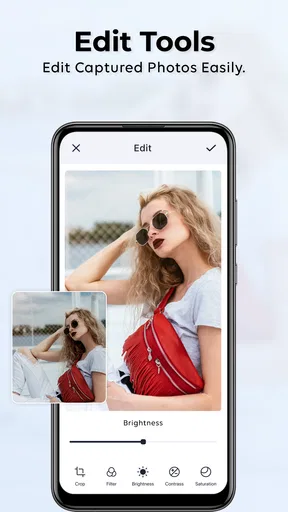
- Variety of filters and editing tools.
- Fast shutter speed for quick captures.
- Supports multiple shooting modes.
Cons
- Contains ads that can be intrusive.
- Limited free features; in-app purchases needed.
- Occasional app crashes reported.
- Battery consumption can be high.
- Requires access to many device permissions.
FAQs for HD Camera for Android
What features does the HD Camera app offer?
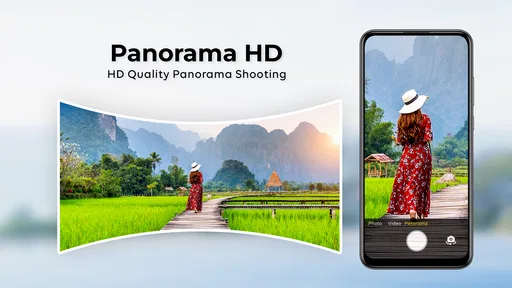
The HD Camera app provides a variety of features including high-resolution photo capture, multiple shooting modes, real-time filter effects, and a professional manual mode. Users can enjoy options such as panorama, HDR, and night mode, making it versatile for different photography scenarios.
Is the HD Camera app user-friendly for beginners?
Yes, the HD Camera app is designed with an intuitive interface that is easy for beginners to navigate. The app offers guided tutorials and tips, helping users to quickly understand and use its features effectively, whether they are capturing photos or editing images.
Does the HD Camera app support video recording?
Absolutely. The HD Camera app supports high-quality video recording, allowing users to capture videos in various resolutions, including Full HD and Ultra HD. Additional features like time-lapse and slow-motion recording provide creative options for video enthusiasts.
Are there any in-app purchases or ads in the HD Camera app?
The HD Camera app is available for free with basic features. However, it includes ads and offers in-app purchases to unlock advanced features such as additional filters and premium shooting modes. Users can choose to upgrade for an ad-free experience and enhanced functionality.
What are the system requirements for installing the HD Camera app?
To install the HD Camera app, users need an Android device running version 5.0 (Lollipop) or higher. The app is optimized for both smartphones and tablets, ensuring smooth performance across different devices, provided there is adequate storage space available.


